Back to Project Types
Fences, gates and garden walls
Ensuring the Safety and Stability of Your Walls
Typically, you won't need building regulation approval for fences, walls, or gates. However, it's absolutely essential that these structures are strong and well-maintained to keep everyone safe.
Understanding Party Walls and Your Garden Boundary
If your garden wall qualifies as a 'party fence wall' – which means it sits on the land of two or more owners and either forms part of a building or serves as a boundary wall – you might need to inform your neighbours. You'll need to do this under the Party Wall etc. Act 1996 before you start certain projects. It's worth noting that this specific Act doesn't apply to wooden fences.
Keeping Your Walls in Top Condition
It's crucial to regularly inspect your garden and boundary walls. Look carefully for any damage that needs fixing or for signs that they might need a complete rebuild. Walls that are not looked after often collapse, and tragically, falling masonry from neglected walls is a frequent cause of fatalities.
You should also be aware that your insurance policy might not cover you if a wall collapses due to a lack of maintenance.
Many factors can affect your walls, beyond just normal wear and tear or simply getting older. For instance, consider these potential issues:
If a wall nearby is removed, your wall could experience greater wind pressure or more intense rain.
Cutting down large, established trees nearby, or planting new ones too close to your wall, can impact its stability.
Any modifications that increase the likelihood of damage from traffic.
Making alterations, such as adding height to the wall or creating an opening for a new gate.
Your Essential Wall Health Checklist
To ensure your walls remain secure, regularly check them for these common problems:
Crumbling brickwork: If you notice bricks crumbling generally across both sides of the wall, this can weaken its structure. A few isolated crumbling bricks might not be a major concern, but always keep an eye on the situation.
Mortar condition: Test the mortar. If you can easily pick out or scrape away the hard outer layer (for example, using a key), your wall probably needs repointing.
Trees nearby: Growing trees can harm walls through expanding roots and branches hitting the wall in strong winds. If damage occurs, you might need to rebuild sections, possibly by creating 'bridges' over the roots. Removing large trees can also cause issues, as the soil then retains more moisture and expands, potentially affecting the wall.
Is your wall upright? Does your wall lean? This could be due to several reasons like root damage, a cracked drainpipe, frost, or poor foundations. If your wall is leaning to a dangerous degree, you should get professional advice. A wall is dangerously leaning if it's more than:
30mm for a half-brick wall.
70mm for a single-brick wall.
100mm for a brick-and-a-half wall.
An expert might also need to examine the wall's foundations.
Wall thickness for its height: If your wall is taller than the recommended height for its thickness, or if the general advice given later doesn't apply (for example, if your wall has supporting piers, holds up heavy gates, or retains soil), then you should get expert guidance.
Climbing plants: Plants like ivy can cause damage if their growth isn't controlled. Consider cutting them back and providing a separate support structure to keep new growth away from the wall.
Top of the wall: Check the very top of your wall. Are the brick cappings or concrete copings loose? Look for horizontal cracks a few courses down, which often indicate frost damage. Any loose or damaged masonry at the top will require rebuilding.
Traffic damage: Even minor scratches from vehicles could be hiding more serious cracks. Piers at vehicle entrances might become dislodged and unsafe; if so, you must rebuild them.
Cracks in the wall: Tiny 'hairline' cracks (0-2mm wide) are quite common and usually don't mean there's a serious problem. However, for wider cracks, any horizontal cracks that go completely through the wall, or cracks near piers or gates, you must get expert advice. Never repoint cracks without first understanding what caused them, as this can lead to even bigger issues. Some cracks might signal that you need to rebuild part or all of the wall.
Understanding Safe Wall Heights
You should always get professional advice if your wall is taller than the maximum height recommended for your specific part of the UK, as shown below. Keep in mind that walls can sometimes be taller in very protected spots or if they have supporting piers.
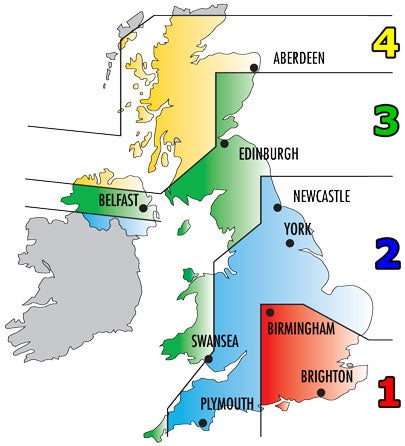
This map of the UK highlights various wind zones, which are important when deciding the right height and thickness for your walls.
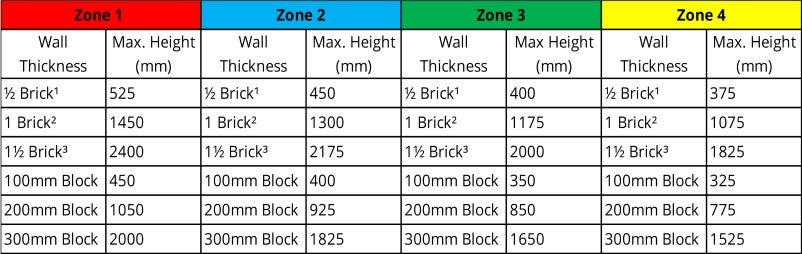
The following diagram offers clear advice on how high your wall should be, considering both its thickness and how exposed it is to wind. Pay attention to the thickness codes:
1 = 100mm
2 = 215mm
3 = 325mm
Related Articles
Do You Need Planning Permission for Fences, Walls, or Gates?
Ensuring the Safety and Stability of Your Walls
Share the Article

Submit your
Application
Join thousands of homeowners and developers who've simplified their planning journey
Disclaimer
This guidance is for general information only and is not legal advice. Planning requirements vary by council and property. You should check your local planning authority's specific requirements before submitting an application or starting work. This guidance applies to England and Wales. When in doubt, contact your local planning authority or seek professional planning advice.
Read Our Terms & Conditions